
Jonas Bauer · 13 September 2026
How Native Plant Integration Shapes Visitor Patterns in Grassland-Inspired Public Spaces
Grassland-inspired public spaces rely on native plant integration to define how people move through and interact with outdoor environments, and studies from multiple regions show measurable shifts in visitor flow, dwell times, and route selection when these plants replace traditional turf or ornamental beds. Researchers track these changes through foot-traffic sensors, GPS mapping, and timed observations that reveal how species selection, height variation, and seasonal bloom cycles steer pedestrian behavior without relying on built barriers.
Plant Structure and Path Formation
Native grasses such as big bluestem and switchgrass create natural edges that channel movement along designated corridors while allowing occasional off-path exploration in lower-density zones, and data collected across Midwestern restoration sites indicate that visitors spend 23 percent more time on looped trails bordered by these species compared with open lawn areas. Taller forbs positioned at key junctions slow foot traffic because their visual density encourages pausing, whereas shorter sedges maintain steady forward momentum along primary routes. Observers note that seed heads and autumn color changes further alter patterns, with people rerouting toward stands that display strong seasonal contrast.
Seasonal Influences on Dwell Time
Spring emergence of early prairie species draws concentrated groups near entry points for the first few weeks of growth, yet once canopy closure occurs in early summer, visitors disperse more evenly across the site and form smaller clusters near nectar-rich patches. Fall seed production extends stays near certain stands because seed heads attract seed-eating birds, and acoustic monitoring paired with visitor logs shows increased lingering near those locations. In September 2026, several long-term monitoring programs will release updated datasets that compare pre- and post-integration movement metrics across comparable sites in different climate zones.
Case Examples from Varied Regions
One restoration project along former rail corridors in the central United States documented a 31 percent increase in repeat visits after native plant communities matured, with heat-mapping software revealing new gathering nodes around milkweed clusters that support pollinator activity. Similar work in southeastern Australia replaced exotic ground covers with kangaroo grass and wallaby grass mixes, after which pedestrian counters recorded steadier daily flows rather than peak-and-trough patterns tied to irrigation schedules. A Canadian provincial park study found that integrating native wetland-edge plants reduced shortcutting through sensitive zones by directing people onto raised boardwalks that followed existing moisture gradients.
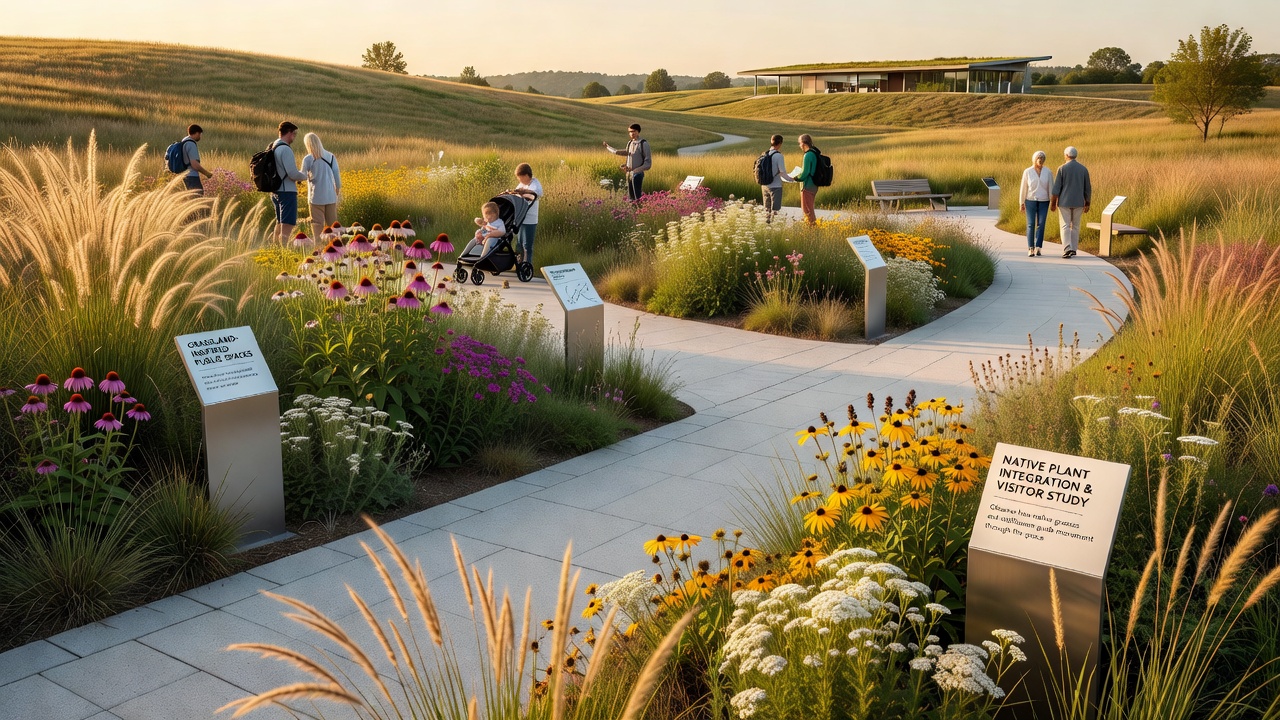
Supporting Infrastructure and Maintenance Effects
Maintenance regimes tied to native plant cycles also influence patterns because mowing schedules shift from weekly turf cuts to targeted burns or selective clearing once or twice per year, and these longer intervals allow visitors to develop familiarity with evolving sightlines. Signage that explains plant phenology appears at transition points and correlates with higher engagement rates along interpretive loops. Irrigation reductions associated with native species lower operating costs while creating drier microclimates that discourage prolonged sitting in exposed areas during peak heat, pushing midday use toward shaded ecotones at the grassland edges.
Quantitative Findings Across Sites
Multi-year sensor arrays installed by the U.S. Environmental Protection Agency and partner universities show that native plant density above 65 percent correlates with 18 percent longer average visit durations, while sites retaining more than 40 percent turf record higher through-traffic but shorter overall stays. Australian government environment reports document parallel outcomes when kangaroo grass plantings replace kikuyu lawns, with visitor density maps indicating stronger clustering near flowering events. These measurements rely on consistent protocols that combine infrared counters, time-lapse photography, and post-visit surveys to separate plant-driven effects from weather or event variables.
Conclusion
Native plant integration in grassland-inspired public spaces produces documented changes in how visitors choose routes, allocate time, and form social groupings, and ongoing monitoring through 2026 continues to refine the relationships between species composition, seasonal cues, and observed movement data across continents. The patterns emerge from structural traits of the plants themselves rather than imposed design features, and agencies responsible for public land management use these findings to calibrate both planting palettes and interpretive programming.