
Sage Patterson · 22 November 2026
Gamification Techniques Influencing Participation in Digitally Simulated Meadow Environments
Digital meadow environments use simulated grasslands and prairie landscapes to model ecological processes, and gamification techniques layer game mechanics onto these platforms to shape how users engage with the systems. Researchers track participation through metrics such as session duration, repeat visits, and task completion rates, with data drawn from platforms that replicate native plant communities and soil interactions in virtual space.
Core Gamification Elements Applied to Meadow Simulations
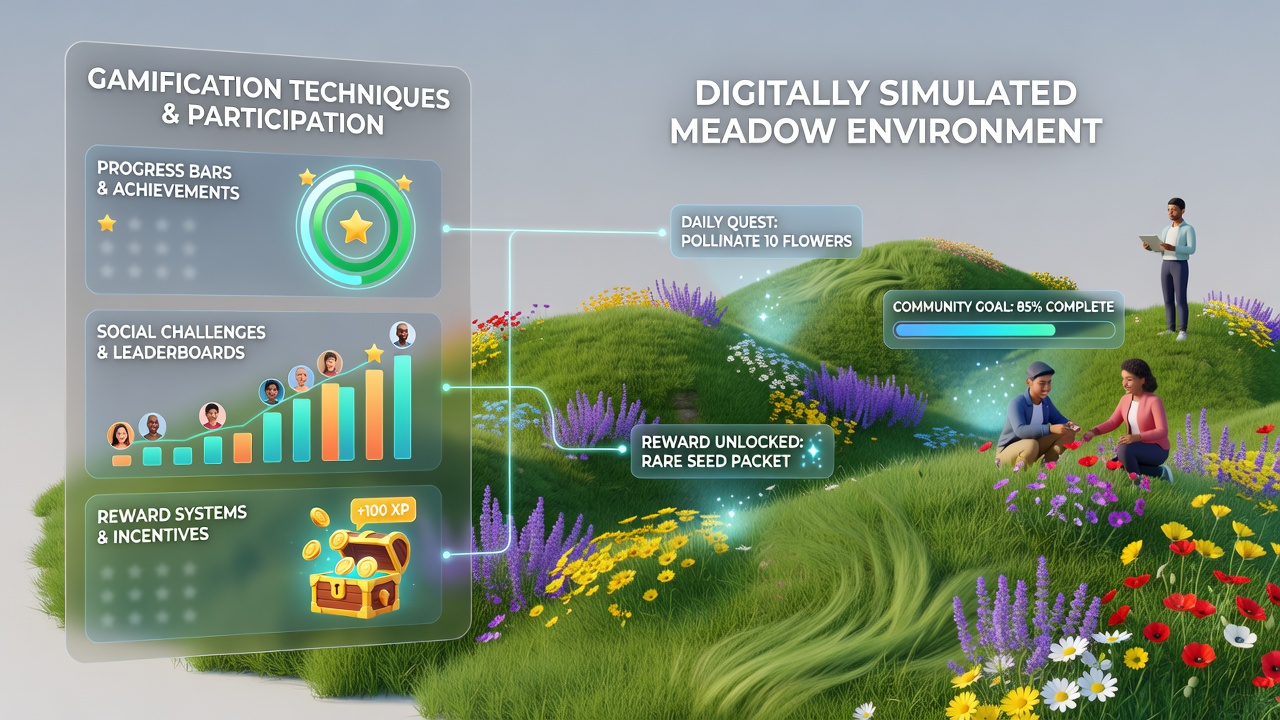
Points systems assign numerical values to actions like mapping plant species distributions or adjusting virtual water flow parameters, and these accumulate to unlock further simulation layers. Badges mark milestones such as completing a full nutrient cycle analysis or identifying pollinator pathways, while leaderboards rank users based on collective contributions to shared meadow models. These mechanics draw from established frameworks in educational technology and environmental modeling programs, where studies from institutions like the National Science Foundation have documented increased data input volumes when such elements activate.
Progress bars visualize advancement through seasonal cycles within the meadow simulation, and daily login rewards encourage consistent monitoring of microclimate variables across multiple sessions. Narrative elements embed story arcs around grassland restoration scenarios, prompting users to make decisions that affect simulated biodiversity outcomes over extended periods. Observers note that these combined features create feedback loops where immediate visual rewards reinforce longer-term data collection habits.
Measured Effects on User Participation Rates
Analytics from multiple virtual grassland projects reveal that platforms incorporating level progression see completion rates for complex modeling tasks rise by measurable margins compared to non-gamified versions. Data collected through embedded sensor arrays in these environments shows users completing more iterations of erosion pattern tests and species interaction simulations when achievement notifications trigger at regular intervals. Participation spikes often align with timed events, such as community challenges that run during specific calendar windows.
One analysis of layered data overlays in meadow reconstructions indicated higher retention among users who earned customization options for their virtual plots after reaching contribution thresholds. Figures from research institutions in Canada and Australia demonstrate similar patterns, where collaborative quests tied to real-world prairie data sets produced sustained engagement across geographically dispersed participant groups. These outcomes hold across different age cohorts and experience levels, according to aggregated reports from environmental simulation networks.
Integration with Broader Environmental Data Systems
Gamification connects to sensor networks that feed live parameters into the meadow simulations, allowing users to influence models based on aggregated inputs from physical prairie sites. When participants complete challenges related to tracking nutrient flows, the system updates shared datasets that researchers later cross-reference with field observations. This linkage appears in projects supported by European Union environmental monitoring initiatives, where virtual participation directly supplements ground-level data collection efforts.
Seasonal resets in the simulations mirror actual grassland phenology, and gamified milestones prompt users to log observations during peak periods such as flowering or migration windows. November 2026 marks the scheduled release of updated participation benchmarks from several ongoing meadow reconstruction studies, with preliminary indicators suggesting continued growth in active user bases following platform expansions that added new quest categories.
Platform Variations and Regional Implementations
North American deployments often emphasize competitive leaderboards tied to regional plant community accuracy scores, whereas European versions prioritize cooperative mechanics around cross-border habitat connectivity models. Australian platforms incorporate drought resilience scenarios with reward structures calibrated to local climate datasets. Each approach adapts core gamification principles to the specific ecological questions driving the simulation, resulting in distinct participation profiles documented in comparative studies.
Technical constraints such as rendering load times and mobile compatibility influence which mechanics deploy most effectively, and developers adjust point allocations accordingly to maintain balance between challenge and accessibility. Training modules for new users introduce these systems gradually, reducing dropout during initial orientation phases.
Conclusion
Gamification in digitally simulated meadow environments operates through interconnected systems of rewards, progress tracking, and collaborative tasks that directly correlate with higher volumes of user-generated data and extended platform interaction periods. Evidence from multiple geographic regions and institutional sources continues to map these relationships as simulation technologies advance, with upcoming data releases in late 2026 expected to refine understanding of long-term participation dynamics.